
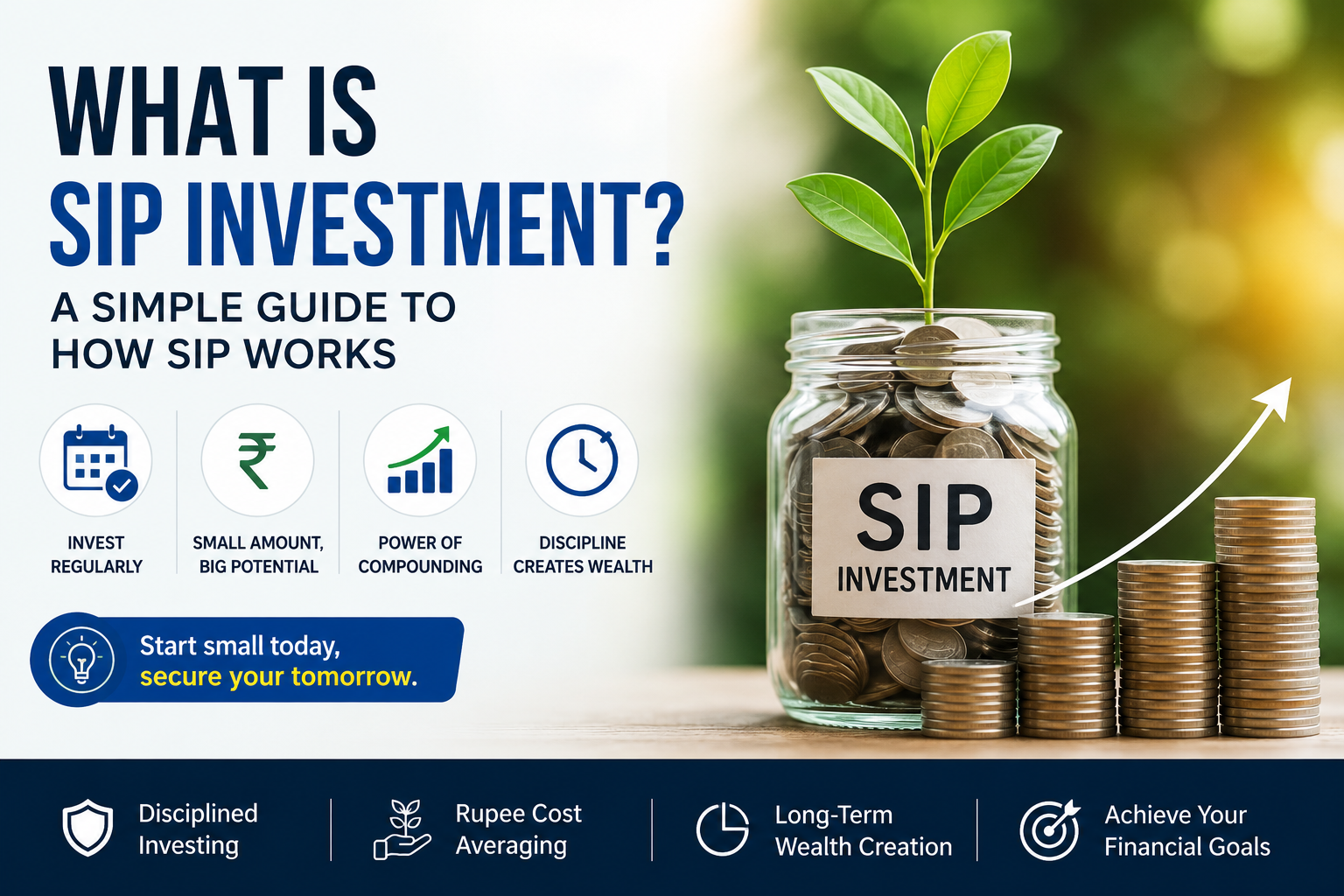
What is SIP Investment? A Simple Guide to How SIP Works
Updated May 2026 | Wealthlook.com
Most people want to invest.
But very few actually begin.
Some think investing needs a huge salary.
Some wait for the “perfect market time.”
Others assume mutual funds are complicated.
The reality is much simpler.
You can start investing through SIPs with an amount smaller than many weekend food bills.
That’s exactly why SIPs have become one of the most popular investment methods in India.
So, What Exactly is SIP?
SIP stands for:
Systematic Investment Plan
In simple words, SIP allows you to invest a fixed amount regularly into a mutual fund scheme.
Instead of investing a large lump sum at once, you invest small amounts consistently — usually every month.
For example:
-
₹1,000 every month
-
₹5,000 every month
-
₹10,000 every month
The amount automatically gets invested into your selected mutual fund.
Think of it like a monthly subscription for your future wealth.
Why SIP Became So Popular in India
Let’s be honest.
Most salaried people struggle with consistency.
At the beginning of every month, we all have:
-
rent
-
EMIs
-
groceries
-
family expenses
-
fuel costs
-
mobile bills
After all this, investing often gets postponed.
SIPs solve this problem beautifully.
Once activated, the money automatically gets deducted from your bank account and invested regularly.
This creates a habit of disciplined investing without needing daily market tracking.
How SIP Actually Works
Let’s understand this with a real-life example.
Suppose Rahul starts a SIP of:
₹5,000 per month
He chooses an equity mutual fund for long-term wealth creation.
Every month:
-
₹5,000 gets deducted automatically
-
mutual fund units are purchased
-
investment continues regularly
Now here’s the interesting part.
When markets fall:
-
mutual fund prices become cheaper
-
Rahul gets more units
When markets rise:
-
he gets fewer units
Over time, this balances the average purchase cost.
This process is called:
Rupee Cost Averaging
And this is one of the biggest strengths of SIP investing.
Understanding SIP Through a Simple Example
| Month | NAV Price | SIP Amount | Units Purchased |
|---|---|---|---|
| January | ₹20 | ₹5,000 | 250 units |
| February | ₹25 | ₹5,000 | 200 units |
| March | ₹16 | ₹5,000 | 312.5 units |
Notice something.
When markets corrected in March, Rahul automatically bought more units without trying to “time” the market.
This is why SIPs reduce emotional investing decisions.
What is NAV?
NAV means:
Net Asset Value
It is simply the price of one mutual fund unit.
Just like stocks have share prices, mutual funds have NAVs.
When you invest through SIP, your money buys units based on the current NAV.
The Real Magic of SIP: Compounding
SIP alone is powerful.
But the real wealth creation happens because of compounding.
Compounding means:
your returns also start generating returns.
In simple words:
Your money starts working for you.
And the longer you stay invested, the stronger this effect becomes.
Imagine This
Suppose two friends start investing.
| Investor | Start Age | Monthly SIP | Investment Period |
|---|---|---|---|
| Aman | 25 | ₹5,000 | 30 years |
| Rohit | 35 | ₹5,000 | 20 years |
Even though both invest the same monthly amount, Aman may end up with significantly higher wealth simply because he started earlier.
This is the power of:
-
time
-
discipline
-
compounding
Not necessarily huge salaries.
SIP Makes Investing Less Stressful
Many beginners constantly worry about:
“Should I invest now or wait?”
The truth is:
nobody can consistently predict markets perfectly.
SIPs reduce this pressure.
Because you invest:
-
during market highs
-
during market crashes
-
during recoveries
-
during uncertainty
Over long periods, this disciplined investing approach often works better than emotional decision-making.
How Much Money Do You Need to Start SIP?
One of the biggest myths is:
“Investing is only for rich people.”
That’s no longer true.
Many SIPs can start with:
-
₹500
-
₹1,000
-
₹2,000
This makes investing accessible for:
-
students
-
salaried employees
-
young professionals
-
first-time investors
How to Decide Your SIP Amount
A simple thumb rule is:
Start with an amount that feels comfortable and sustainable.
| Monthly Salary | Possible SIP Start |
|---|---|
| ₹25,000 | ₹2,000–₹3,000 |
| ₹50,000 | ₹5,000–₹10,000 |
| ₹1 lakh | ₹15,000+ |
The important thing is not perfection.
It is consistency.
Even small SIPs can become meaningful over long periods.
Who Should Invest Through SIP?
SIPs are suitable for almost everyone.
Especially:
-
beginners
-
salaried individuals
-
long-term investors
-
retirement planners
-
parents planning child education
-
people building future wealth gradually
Common Mistakes SIP Investors Make
1. Stopping SIP During Market Falls
This is one of the biggest mistakes.
Market corrections actually allow investors to accumulate more units at lower prices.
Temporary volatility is normal in equity investing.
2. Expecting Quick Returns
SIPs are not lottery tickets.
Real wealth creation usually requires:
patience + time + discipline
3. Starting Late
Many people delay investing thinking:
“I’ll start once my salary increases.”
But delaying investments can significantly reduce long-term compounding benefits.
Starting early matters more than starting big.
SIP vs Traditional Savings
Keeping money in savings accounts provides safety and liquidity.
But inflation slowly reduces purchasing power over time.
For example:
The ₹100 grocery bill from several years ago can easily cross ₹250 today in many cities.
That’s inflation silently affecting everyday life.
SIPs aim to:
-
grow money faster over long periods
-
potentially beat inflation
-
create long-term wealth
Can SIP Help You Become Financially Stronger?
SIP alone will not make someone rich overnight.
But consistent investing over many years can create meaningful financial stability.
A disciplined SIP can help build funds for:
-
retirement
-
home purchase
-
child education
-
financial independence
-
emergency backup
Small monthly decisions today can create major financial comfort later.
Final Thoughts
SIP investing is not about chasing quick profits.
It is about building financial discipline gradually.
The beauty of SIP lies in its simplicity:
-
invest regularly
-
stay patient
-
avoid emotional decisions
-
give compounding enough time
You do not need perfect market timing.
You simply need consistency.
Because in long-term investing, time in the market often matters more than timing the market.
Frequently Asked Questions (FAQs)
Is SIP safe for beginners?
SIPs invest in mutual funds, which are market-linked.
While short-term fluctuations happen, SIPs are widely used by beginners for long-term investing.
Can I stop SIP anytime?
Yes.
Most SIPs can be paused, modified, increased, or stopped anytime.
What is the minimum amount required for SIP?
Many mutual funds allow SIPs starting from ₹500 per month.
Is SIP better than FD?
Both serve different purposes.
-
FDs offer stability and fixed returns.
-
SIPs offer long-term wealth creation potential through market-linked investments.
How long should I continue SIP?
For equity mutual funds, longer durations like 10–20 years generally improve the benefits of compounding and rupee cost averaging.
Should I invest during market crashes?
Many long-term investors continue SIPs during market corrections because lower prices allow accumulation of more units.
Disclaimer
Mutual fund investments are subject to market risks.
Please read all scheme-related documents carefully before investing.
This article is for educational purposes only and should not be considered financial advice.